Orchestration layer
Keeps agent handoffs, task boundaries, and source-of-truth docs pointed at the same product outcome.
Aurora codename
The developer operating system behind PixelBoats.
Aurora is Canopy’s internal game-dev and devops operating layer for turning PixelBoats work into visible proof: repo truth, task cards, verification gates, screenshots, release notes, and deploy-safe handoffs. It is a codename and case study, not a standalone SaaS product yet.
Operating layer
A public-safe view of the operating model without exposing private scripts, customer data, paid material, or internal fulfillment details.
Keeps agent handoffs, task boundaries, and source-of-truth docs pointed at the same product outcome.
Turns game-world experiments into screenshots, route-local QA, release notes, and claim boundaries.
Separates build, smoke, live verification, and rollback notes before a public page says something is ready.
Shows how Canopy handles software that has to move from prototype energy to supportable delivery.
Proof loop
Aurora keeps the marketing layer honest by making the evidence trail part of the product process.
Choose the smallest product promise that can be verified.
Use screenshots, route smokes, metadata drafts, and notes as proof.
Publish only the claims that survive build, browser, and live checks.
Current UI capture
These public-safe captures come from the current PixelBoats Aurora shell. They show the orchestration surface and a cropped workspace view, not a standalone product launch claim.
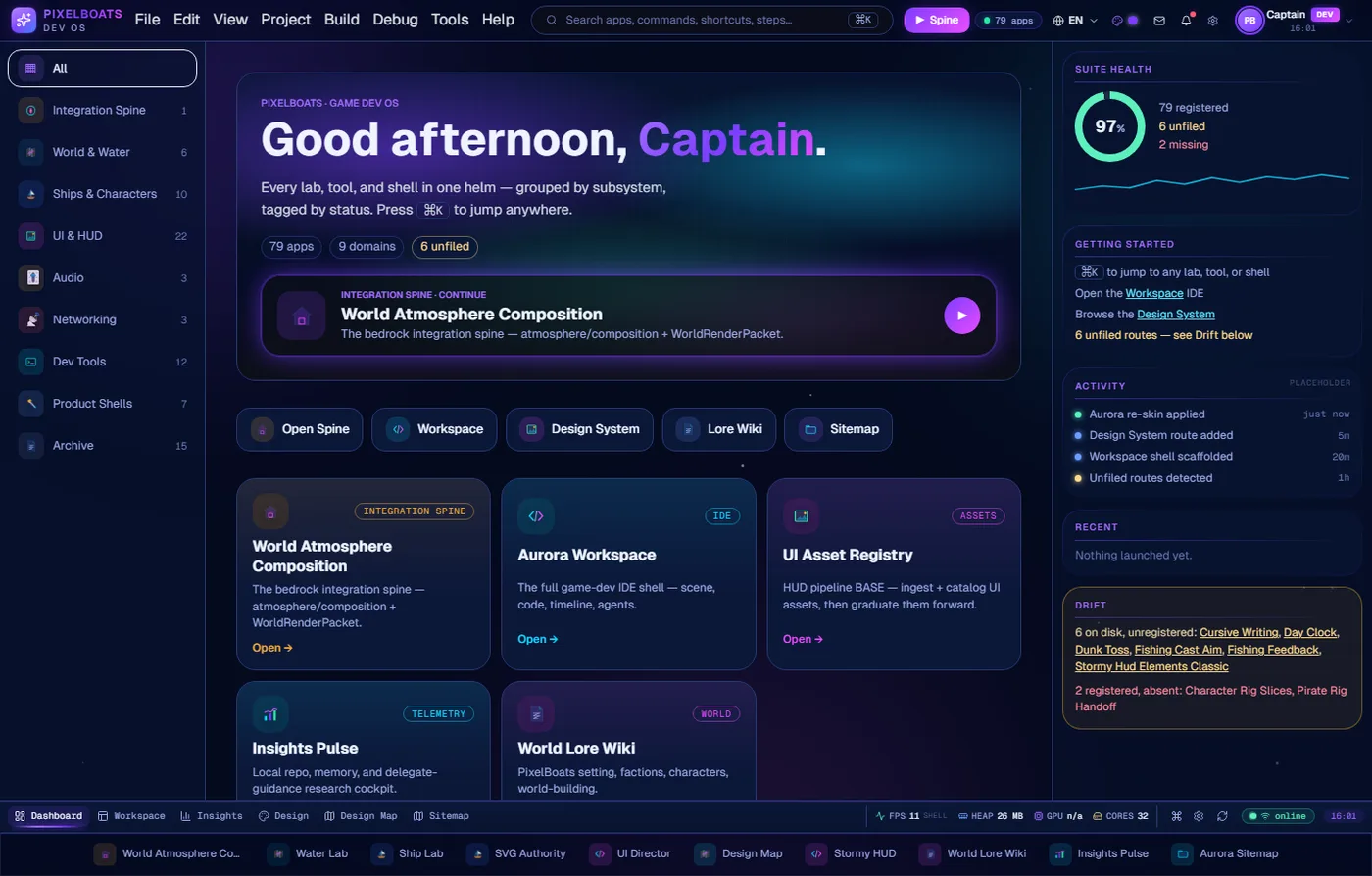
The PixelBoats app hub gathers routes, proof surfaces, health signals, and launch-relevant work into one operating view.
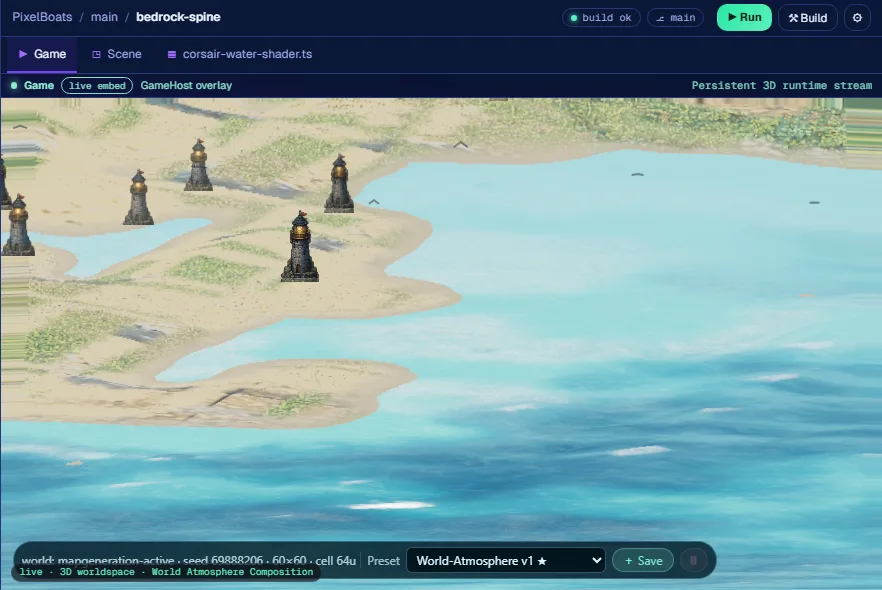
A cropped public view of the game-dev surface, focused on the live PixelBoats world viewport instead of private rails or logs.
Claim boundary
Visible case study
PixelBoats is the visible case study: a game-world visual system narrowed into a public marketing and proof lane.